
THE PHYSICAL LAYER
AI ultimately runs on electrical infrastructure.
Most conversations about artificial intelligence begin with models, chips, and software. But every model depends on something much less abstract: reliable electrical power delivered to physical equipment, continuously, at extraordinary density.
That reality is turning the AI buildout into an electrical-infrastructure buildout.
Lawrence Berkeley National Laboratory estimates that data centers could account for 11.8% of total U.S. electricity use by 2030, with scenarios ranging from 9.5% to 15.3%. The International Energy Agency expects global data-center electricity consumption to roughly double from 485 terawatt-hours in 2025 to 950 TWh in 2030, while consumption from AI-focused facilities triples.12
Those are projections, not guarantees. Efficiency will improve, projects will be delayed, and some proposed facilities will never be built. But the direction is clear:
Computing demand is becoming power demand, and power demand becomes physical work.
BEYOND THE DATA HALL
The opportunity runs through the entire electrical chain.
A data center may be the visible project, but the electrical scope begins long before power reaches a server rack.
New load can require generation capacity, transmission upgrades, substations, distribution equipment, and utility interconnections. Inside the site, the work continues through medium-voltage systems, switchgear, transformers, generators, uninterruptible power supplies, busway, grounding, protection, controls, monitoring, and redundant distribution paths.
Then come testing, commissioning, documentation, and years of maintenance.
The Bureau of Labor Statistics projects utilities to be the fastest-growing major U.S. industry sector from 2025 to 2035, with nearly all of that growth expected in electric-power generation, transmission, and distribution as demand rises, including demand associated with AI. BLS also projects electrician employment to grow 9% over the decade, with about 72,700 openings per year, and electrical power-line installer employment to grow 10%.345
The AI economy will still employ software engineers. It will also need apprentices, journeymen, foremen, estimators, project managers, engineers, relay technicians, commissioning specialists, and service crews.
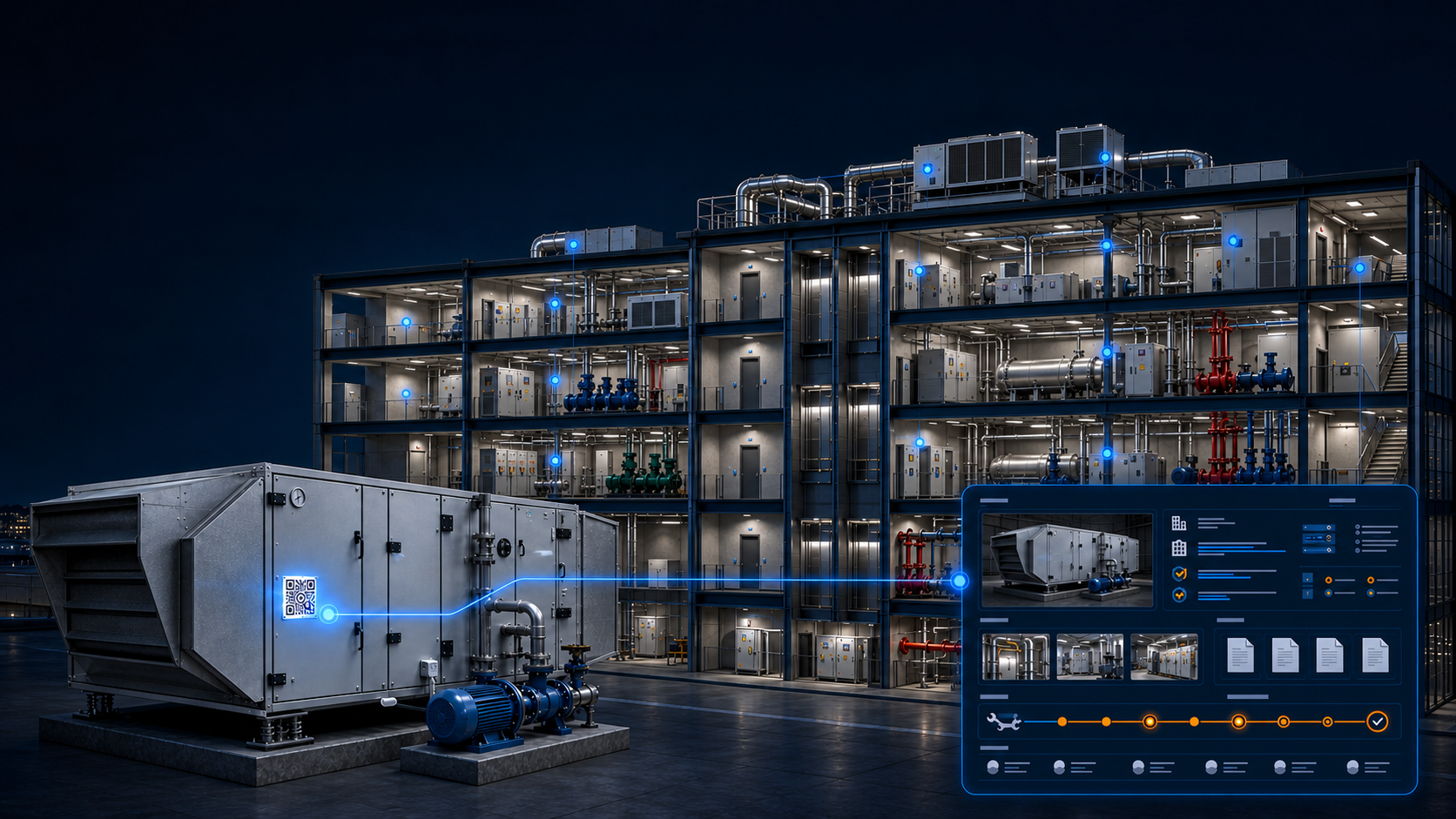
ONE CONNECTED SCOPE
The work does not stop at the rack.
A HIGHER TECHNICAL STANDARD
The trade will become more technical—not less human.
This does not mean every electrician will work inside a hyperscale campus. It means the standard of electrical work will continue to rise across a broader market.
Mission-critical projects reward capabilities that transfer elsewhere: medium-voltage experience, selective coordination, power-quality analysis, controls integration, thermal awareness, disciplined testing, and the ability to execute around live operations. Contractors that develop those skills can apply them to advanced manufacturing, healthcare, energy storage, utility modernization, and other high-consequence facilities.
Digital fluency will matter as well. The winning electrical teams will not replace field knowledge with software. They will connect the two.
An estimator should be able to trace a feeder quantity back to its drawing and revision. A foreman should know whether an addendum changed the approved installation. A commissioning team should inherit verified equipment data instead of rebuilding it from disconnected submittals. An owner should receive an asset record linked to installation, testing, warranty, and maintenance history—not a folder of PDFs assembled at closeout.
As systems grow more complex, documentation stops being clerical work. It becomes part of the installed system.
THE CONSTRAINTS
Bottlenecks will make operational discipline more valuable.
The scale of projected demand does not make delivery easy. It exposes the bottlenecks.
The Department of Energy has identified a national shortage of distribution transformers driven by rising demand and supply-chain constraints.6 Grid interconnections, large power equipment, skilled labor, and commissioning capacity can all govern a project schedule. The IEA outlook similarly warns that near-term bottlenecks will limit the most aggressive data-center growth scenarios.
Contractors will need earlier equipment decisions, stronger vendor relationships, more prefabrication, better labor forecasting, and tighter control of revisions. They will need to preserve the reason behind substitutions and field decisions because a late change to electrical scope can affect procurement, coordination, energization, and commissioning at once.
Speed will matter. Traceability will matter more.
A DURABLE OPPORTUNITY
The next generation can build the technology economy.
There is an understandable fear that AI will reduce the need for human work. In electrical construction, the near-term story looks different.
AI is creating demand for infrastructure that must be designed, installed, tested, energized, and maintained in the physical world. Software may help interpret documents, compare revisions, predict risk, and organize records. It cannot assume responsibility for a lockout procedure, verify torque, diagnose an unexpected field condition, or authorize energization.
That creates an opening for the industry to recruit differently. The electrical trade can offer a path that combines hands-on skill with automation, data, controls, and critical infrastructure. Apprentices entering now are not choosing between traditional electrical work and the technology economy. Increasingly, electrical work is part of the technology economy.
The opportunity is larger than a cycle of data-center construction. The same workforce and operating knowledge will be required to strengthen the grid, expand domestic manufacturing, modernize buildings, and support the next generation of energy systems.
AI may be the catalyst. The lasting result can be a more capable electrical workforce, better project records, and infrastructure built to serve decades of demand.
The intelligence may run in the data center. The trade will build what makes it possible.
EXPLORE THE FRONTIER INTELLIGENCE LOOP →Source notes
- Lawrence Berkeley National Laboratory — United States Data Center Energy Usage Report: 2025 Update, accessed September 5, 2026.
- International Energy Agency — Key Questions on Energy and AI, accessed September 5, 2026.
- U.S. Bureau of Labor Statistics — Employment Projections, 2025–2035, September 2026.
- U.S. Bureau of Labor Statistics — Electricians, Occupational Outlook Handbook, accessed September 5, 2026.
- U.S. Bureau of Labor Statistics — Electrical Power-Line Installers and Repairers, accessed September 5, 2026.
- U.S. Department of Energy — Distribution Transformers: Preparing for Growth Demand, accessed September 5, 2026.