THE PROBLEM
The industry problem is not a lack of data. It is broken continuity.
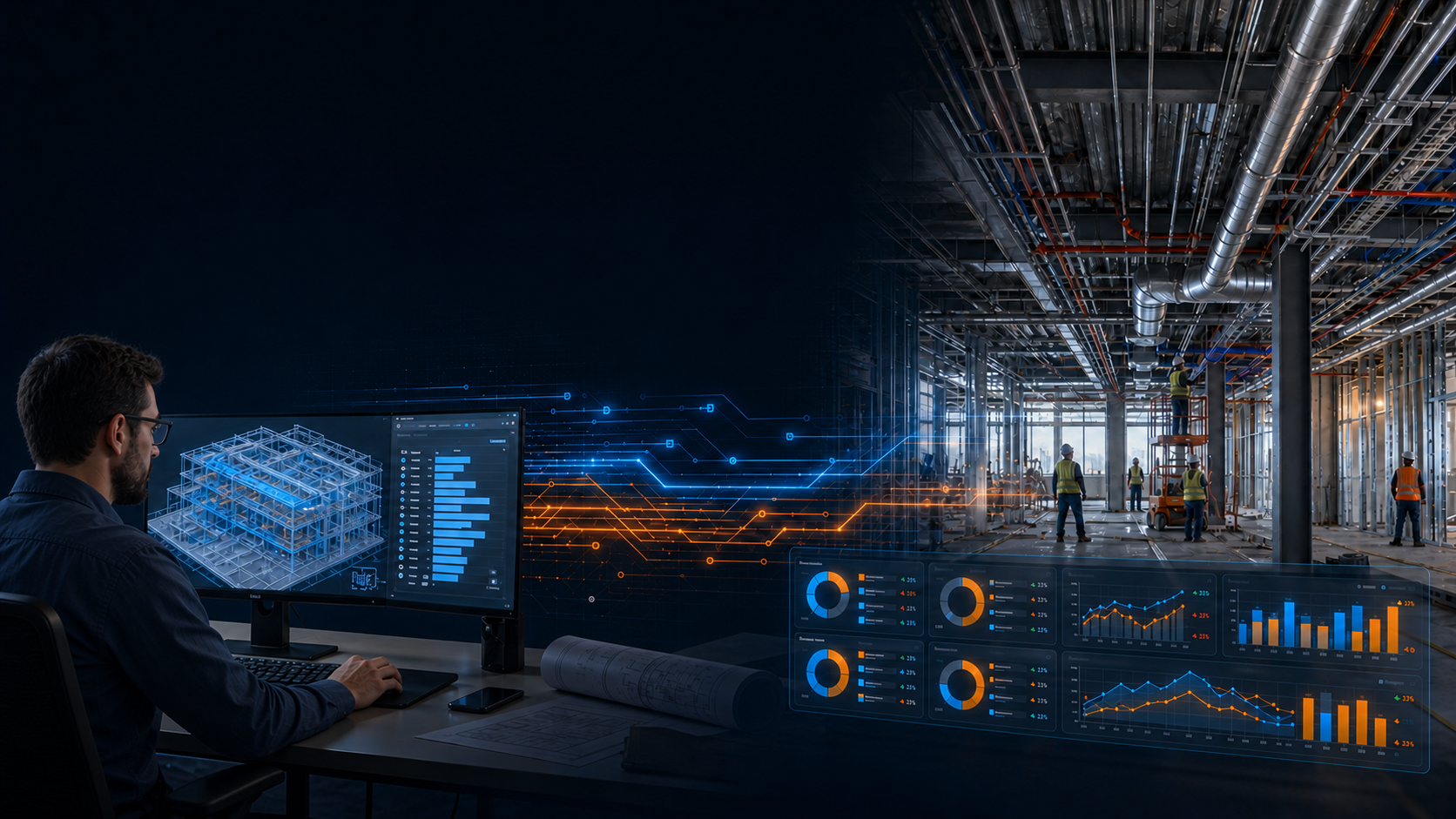
Construction creates information constantly: drawings, specifications, addenda, takeoff quantities, field notes, RFIs, photographs, labor records, equipment data, commissioning reports, maintenance history, and the undocumented knowledge carried by experienced people. The problem is that these records rarely remain connected as the job moves from estimating to execution and from turnover to operations.
Each handoff strips away context. The estimator knows why a quantity was carried, but the field may see only a line item. The foreman knows what was actually installed, but the next estimate may never receive that evidence. The closeout package may contain the right documents, but the facility team still has to search hundreds of pages to answer one equipment-specific question. A conversation resolves an issue today, then disappears before it can improve tomorrow's work.
A project should not lose its intelligence every time responsibility changes hands.
The scale of the data problem is not theoretical. A 2021 Autodesk/FMI study of more than 3,900 construction professionals estimated that inaccurate, incomplete, inaccessible, inconsistent, or untimely data may have cost the global construction industry $1.85 trillion in 2020. The figure is an estimate from sponsored research, not a current market total, but the underlying failure is familiar: more data does not create better decisions when the data is fragmented or untrustworthy.1
THE SHIFT
Digital delivery is becoming a life-cycle obligation.
The industry's direction is already visible in formal delivery standards. The U.S. Army Corps of Engineers' May 2026 manual for Advanced Modeling requires record models and drawings to reflect approved construction changes, including redlines, RFIs, and contract modifications, together with updated construction-phase facility and site data. The same manual calls for integration with asset-management systems and identifies artificial intelligence and knowledge management as part of the transition to advanced digital project delivery.2
That is more than a BIM requirement. It is a signal that the useful record of a project must survive design, construction, turnover, operation, maintenance, and eventually replacement. A final PDF can remain the official record while a more usable interface makes its contents searchable, navigable, equipment-specific, and connected to later evidence. The point is not to discard authoritative documents. It is to stop forcing people to use a paper-map workflow in a GPS world.
THE FRONTIER INTELLIGENCE THESIS
Build the thread, then apply AI.
Frontier Intelligence is being developed around a simple architectural idea: preserve the evidence and context created at each stage, then make that context useful to the next stage. The products are at different stages of development, but the governing rules are common: the customer owns the data, the source remains traceable, consequential changes remain reviewable, and an accountable person retains authority.
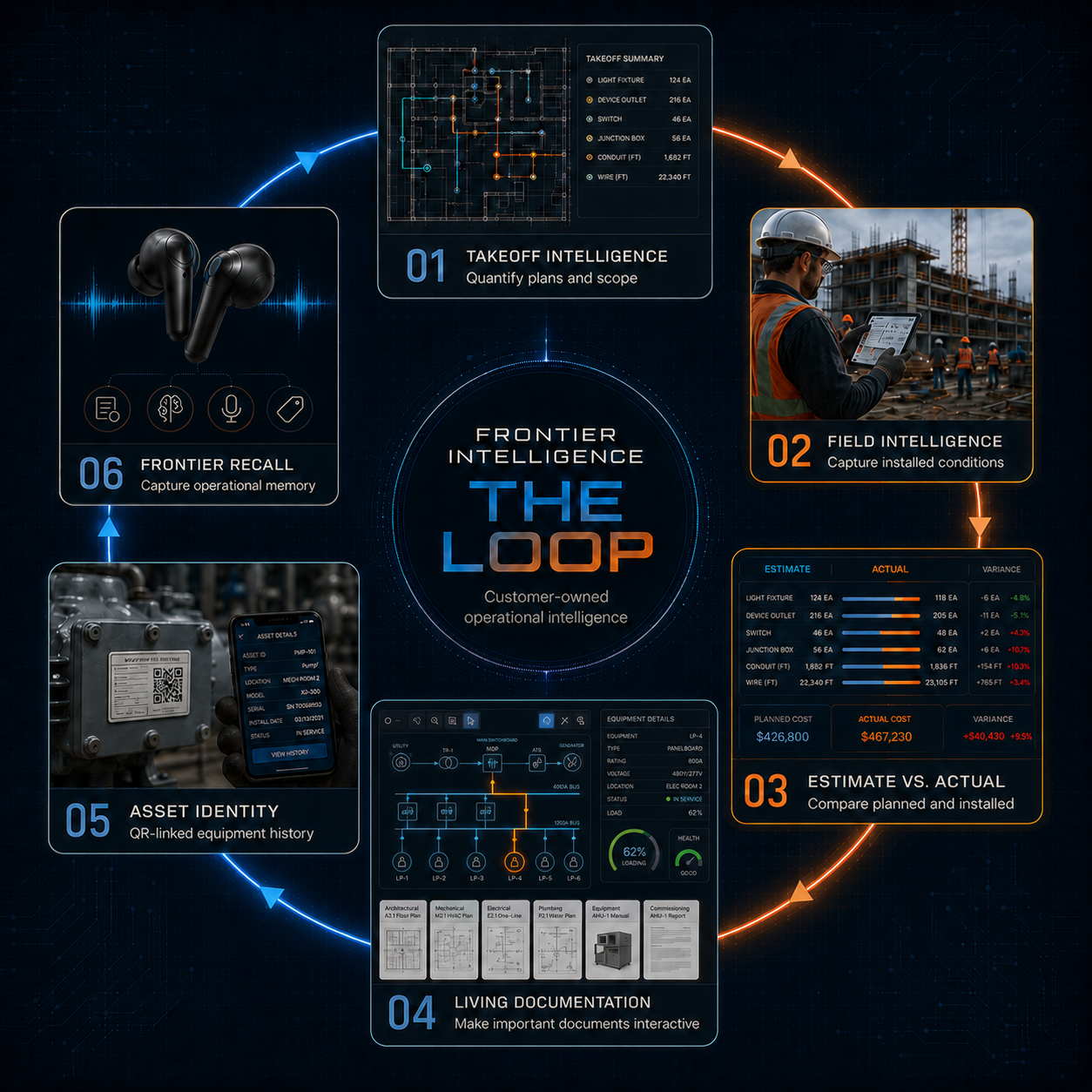
This creates a loop rather than a collection of point tools. Frontier Takeoff Intelligence establishes the planned baseline. Frontier Field Intelligence records installed conditions. Frontier Estimate vs. Actual Intelligence turns those conditions into learning. Frontier Living Document Intelligence carries approved knowledge into turnover. Frontier Asset Intelligence keeps equipment history attached to the physical world. Frontier Recall preserves moments and operational memory that would otherwise disappear. The next plan begins with better evidence than the last one.
THE PRODUCTS
One responsibility at each stage.
Each product is designed to stand on its own. Their value compounds when the context created by one stage remains useful to the next.

01 / PLAN
Frontier Takeoff Intelligence
Turn the complete bid package into traceable, estimator-ready scope.
Frontier Takeoff Intelligence is designed as a multi-trade workspace for drawings, specifications, addenda, scope, and risk. Calibrated count, linear, and area tools create live quantities while source references, notes, review state, and revision history stay attached to the measurement. The goal is not simply faster marks on a PDF. It is a defensible quantity register that can move into the estimate without losing where each decision came from. The local-first design keeps the operating workflow close to the estimator and preserves customer control of project data.

02 / BUILD
Frontier Field Intelligence
Convert raw observations into reviewed project facts.
Frontier Field Intelligence is designed for foremen, technicians, superintendents, and project managers working where connectivity may be unreliable. Structured notes, drawing references, labor and material observations, photographs, and installed conditions are saved locally first. A governed capture-review-queue path keeps the raw note separate from an authoritative project update until someone with the right responsibility reviews it. The purpose is speed without erasing accountability.
03 / LEARN
Frontier Estimate vs. Actual Intelligence
Compare what was planned with what was installed—at the level where learning is possible.
A total job-cost variance can tell a company that it missed. It rarely explains why. Frontier Estimate vs. Actual Intelligence is intended to connect planned quantities and costs to installed quantities, field evidence, location, scope, and approved changes. That makes variance useful: a missed assumption, design revision, productivity issue, material substitution, or scope condition can be separated. The objective is not to punish the field with a red dashboard. It is to give estimating and operations a trustworthy feedback loop.
04 / HAND OFF
Frontier Living Document Intelligence
Make any important document interactive without replacing the authoritative record.
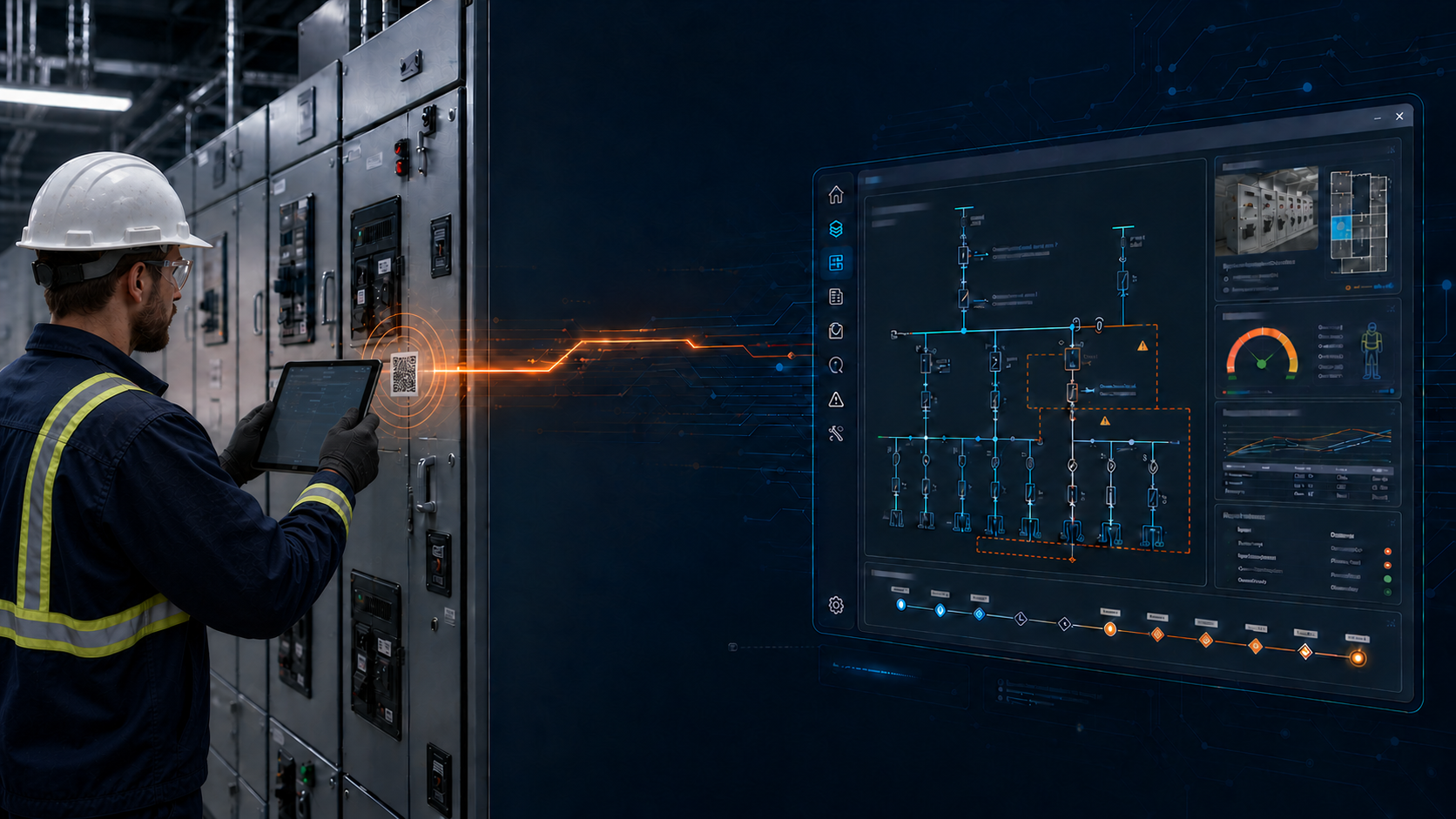
Frontier Living Document Intelligence is trade-agnostic. A single-line diagram is a strong example because relationships matter, but the same concept applies to architectural plans, mechanical schedules, plumbing risers, equipment submittals, O&M manuals, commissioning reports, safety studies, and other records people repeatedly need to navigate. Interactive hotspots, search, linked details, upstream and downstream relationships, photos, and equipment context turn a static deliverable into a practical daily interface. The signed or engineered document remains the authority; the living layer makes it usable.
05 / OPERATE
Frontier Asset Intelligence
Give physical equipment a durable, QR-linked identity and history.
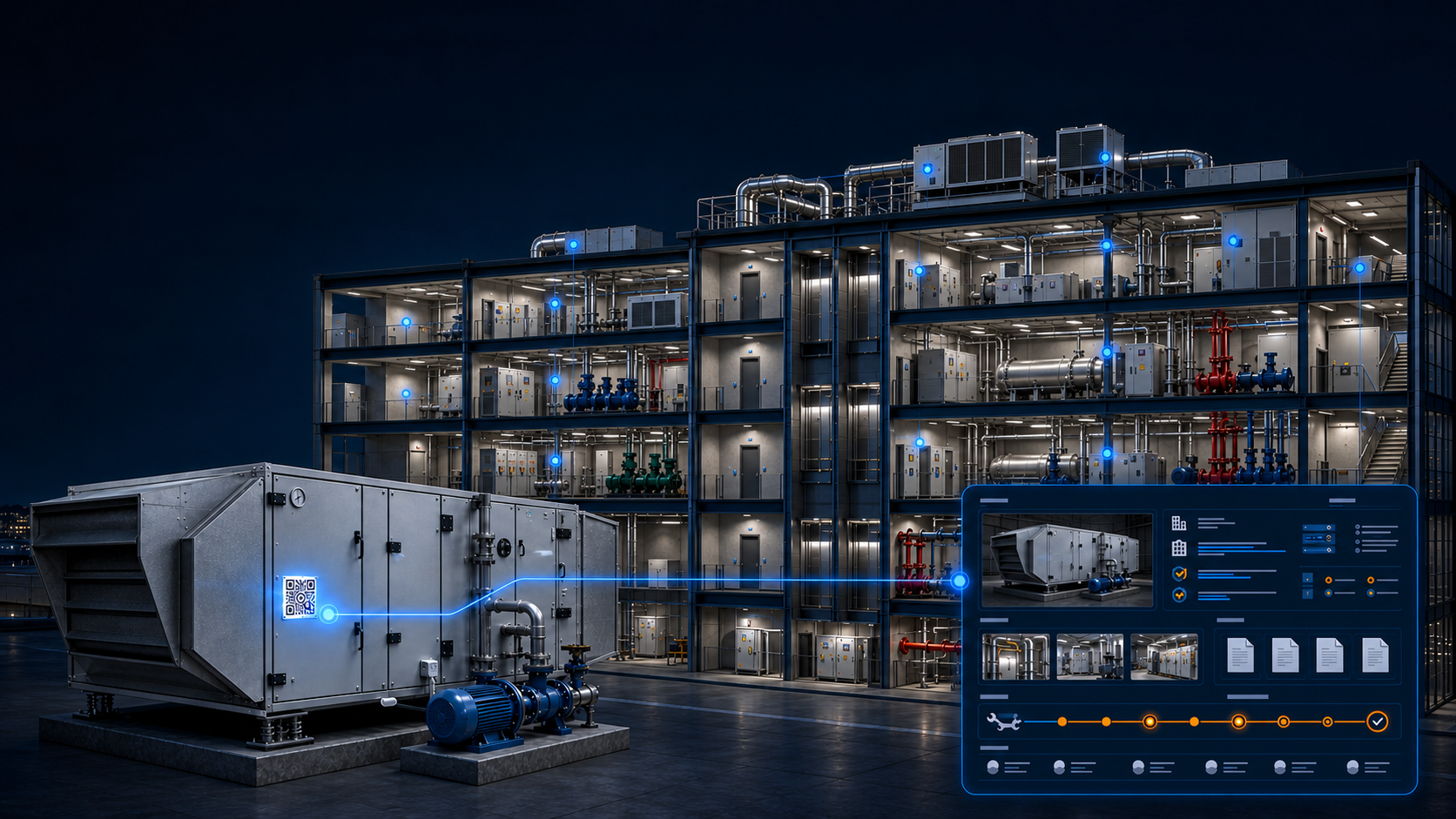
Frontier Asset Intelligence connects a real piece of equipment to its model, serial number, location, installation date, documents, photographs, maintenance activity, and change history. A QR code is only the doorway. The product value is the governed asset identity behind it: the same asset record can be created during installation, enriched at turnover, and used by operations without rebuilding context from scratch.
06 / REMEMBER / IN DEVELOPMENT
Frontier Recall
Capture operational memory while the work is happening.
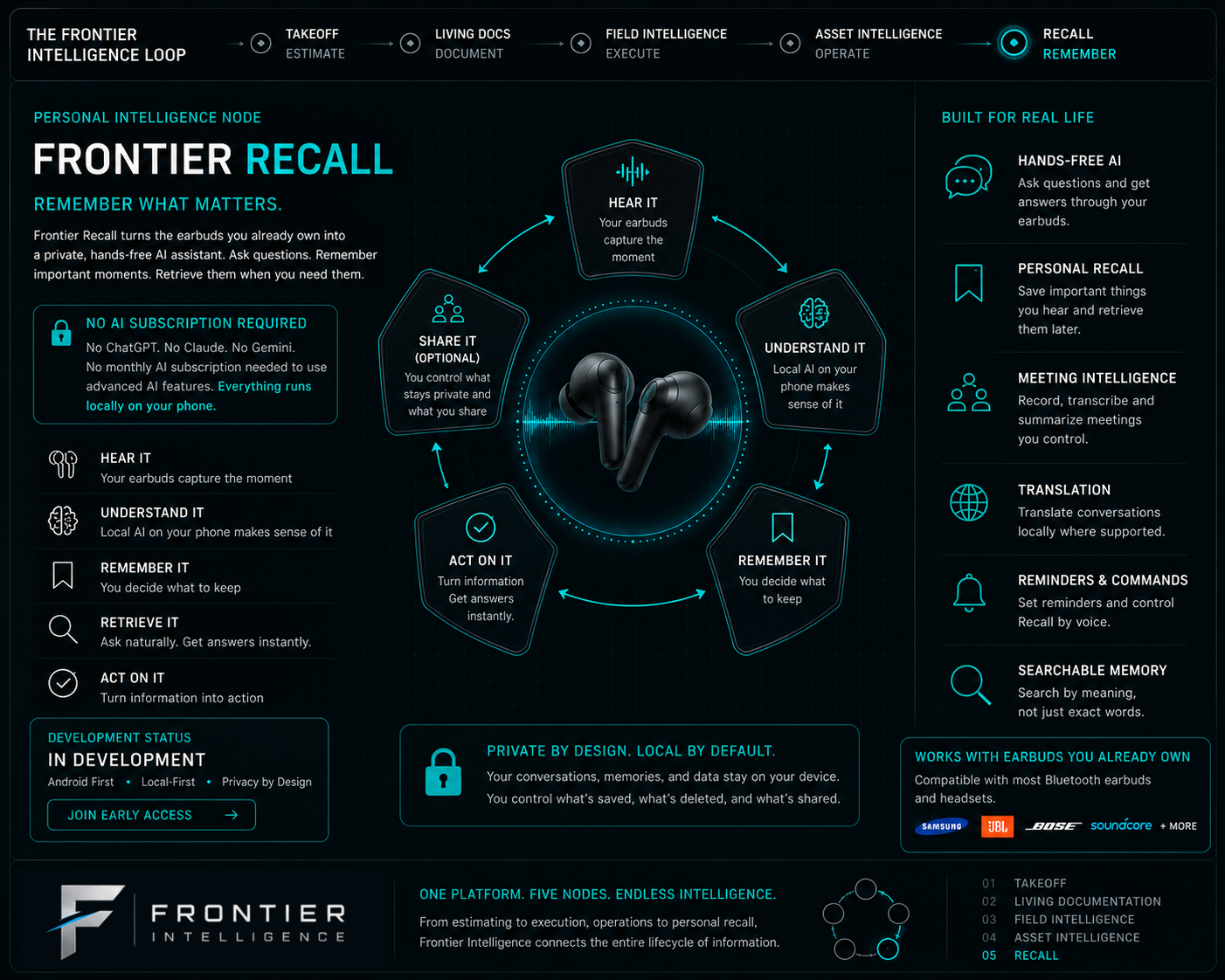
Frontier Recall is an Android-first product in development. Its intended role is to help a user capture moments, retrieve reminders, ask questions of retained context, and preserve useful operational memory through devices they already own. The design is local-first and privacy-led: the user controls what is kept, deleted, or shared. In the field, the opportunity is larger than transcription. Deliveries, decisions, names, commitments, observations, and follow-ups can become retrievable context instead of disappearing when the conversation ends.
IN PRACTICE
How the Loop works on an actual project.
Consider a multi-trade renovation. During preconstruction, Takeoff Intelligence packages the drawings, specifications, and addenda, then produces source-linked quantities and scope context. The estimator can see what was counted, where it came from, and which assumptions still require review.
During execution, Field Intelligence captures an installed condition against the same location and scope. The office reviews the observation before it changes the authoritative record. Estimate vs. Actual can then compare the approved baseline with the installed outcome and preserve the reason for the variance.
At turnover, Living Docs makes important plans, diagrams, reports, and manuals easier to navigate. Asset Intelligence links installed equipment to those records and to its continuing history. Frontier Recall can retain approved operational memory around decisions, deliveries, troubleshooting, and future actions. When the company estimates the next project, it is not beginning from a blank spreadsheet and institutional memory. It is beginning from evidence.
Every handoff becomes a controlled transfer of context instead of a reset.
RESPONSIBLE AI
What responsible AI looks like in industrial work.
Industrial AI cannot be judged by the same standard as a clever consumer demo. NIST's 2026 AI-for-manufacturing agenda focuses on data-pipeline integration, agent communication, real-world use cases, and the metrics, benchmarks, and verification protocols needed to trust autonomous industrial decisions.3
NIST's Generative AI Profile also notes that organizational use of generative AI may require additional human review, tracking, documentation, and management oversight. That is the right direction for construction and facility work, where an untraceable answer can affect cost, schedule, safety, commissioning, or maintenance.4
Evidence before fluency
A confident answer is not enough. The user should be able to see the drawing, note, photograph, quantity, change, or asset record behind it.
Human authority
AI can organize, retrieve, compare, flag, and recommend. A responsible person approves consequential changes and remains accountable.
Customer-owned data
Useful intelligence should not require a contractor or owner to surrender permanent custody of drawings, field records, facility data, and operational history.
Local-first where it matters
On-device and on-premises execution can improve privacy, resilience, and latency. Cloud services can remain optional when the customer chooses them.
Governed handoffs
A field observation should not silently rewrite an estimate, an as-built, or an asset record. Each transfer needs review state, provenance, and reversible history.
THE DIRECTION OF TRAVEL
Where AI in construction is going.
The next phase of construction AI will not be defined by who adds the most chat windows. It will be defined by who can connect trustworthy project context to real workflows without removing the people who carry professional responsibility.
THE OUTCOME
The goal is not more software. It is retained intelligence.
A contractor should not have to rebuild the truth of a project at every phase. An owner should not receive a pile of closeout files that become harder to use the day after turnover. A facility should not lose its equipment history because one technician leaves. An estimator should not repeat the same assumption because the prior project's actual outcome never returned.
Frontier Intelligence is being built to close those gaps with a customer-owned operational thread. The value of the Loop is not that six products share a logo. It is that each product has a clear responsibility, and each creates evidence the next stage can use.
Keep your data. Unlock the intelligence.
EXPLORE THE FRONTIER INTELLIGENCE LOOP →