THE HANDOFF GAP
The closeout package can be complete and still fail the person standing in front of the equipment.
The drawing may be correct. The study may be signed. The O&M manual may contain the answer. But when a technician needs to understand what feeds a panel, find the approved submittal for a component, or confirm the relationship between two systems, the operational question is rarely organized the way the documents were delivered.
That is the gap Frontier Living Document Intelligence is meant to close.
It does not turn an approved drawing into an endlessly editable wiki. It does not allow AI to rewrite engineering judgment. It does not create a second record that competes with the signed source.
The authoritative document remains authoritative. The living layer makes it usable.
CONTROLLED ACCESS
Static is not the same as trustworthy.
Construction depends on controlled documents for good reason. Revisions matter. Approvals matter. The difference between a field observation and an engineered change matters. A system that makes information easier to access cannot erase those boundaries.
But preserving a document exactly as issued and making its information practical to retrieve are different problems.
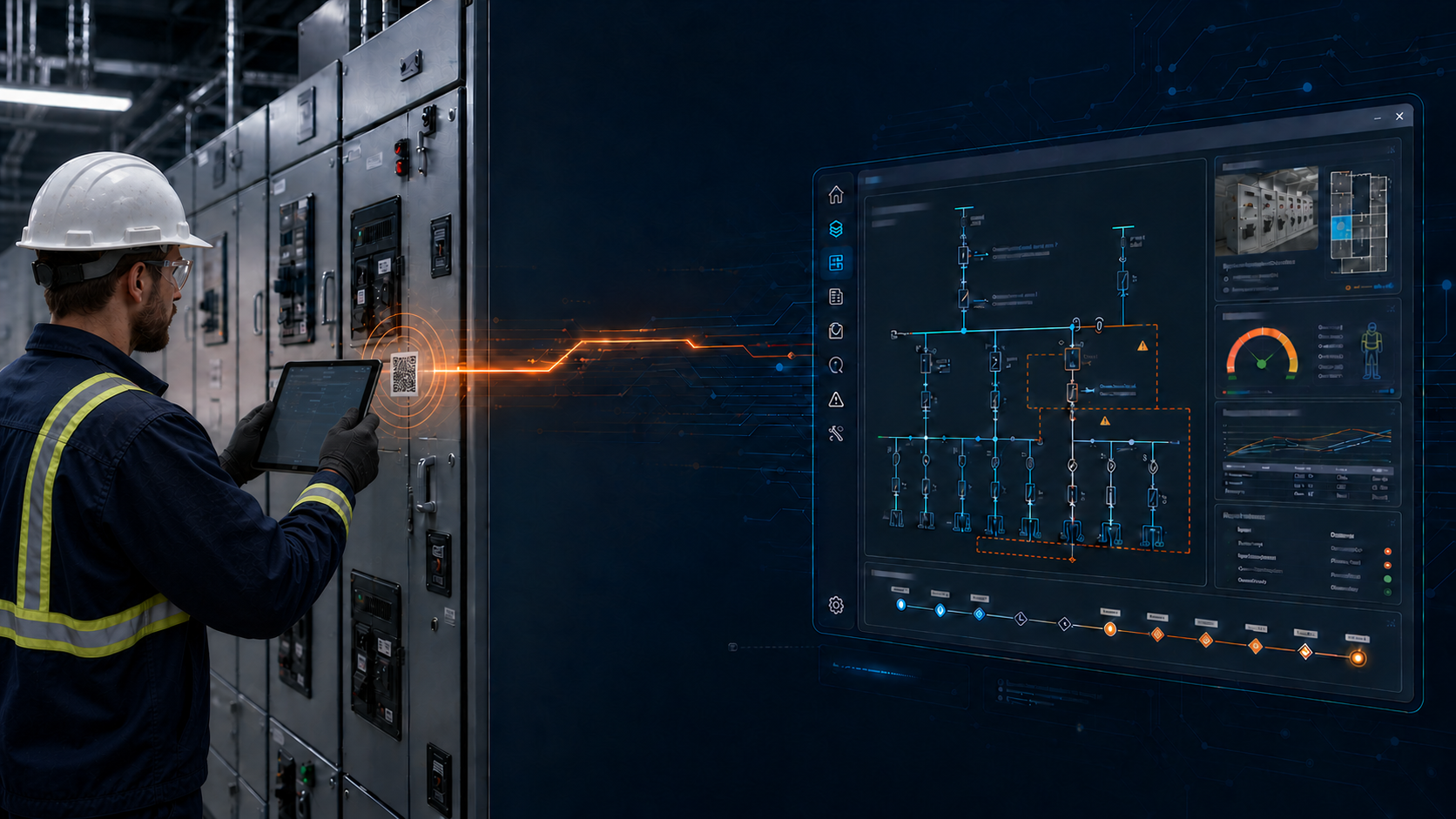
A one-line diagram can remain a fixed, approved record while an interactive layer adds searchable equipment names, navigable upstream and downstream relationships, photographs, linked details, maintenance context, and references to supporting documents. The user can move through the system without altering the underlying engineering.
This principle extends well beyond electrical work. Architectural plans, mechanical schedules, plumbing risers, equipment submittals, commissioning reports, safety studies, and O&M manuals all contain information that people must repeatedly find and connect.
The U.S. Army Corps of Engineers' Advanced Modeling for Digital Project Delivery manual, dated May 6, 2026, describes digital representations that embed life-cycle data relevant to design, construction, operations, and maintenance. It also calls for products that integrate with asset-management systems and support information throughout the facility life cycle. The direction is clear: project information is expected to remain useful after the project team leaves.1
GOVERNED CONTINUITY
A living layer needs disciplined boundaries.
“Living” should describe the continuity of context, not uncontrolled change.
A trustworthy implementation needs to distinguish the authoritative source document, reviewed information linked to that source, and new observations awaiting approval.
That separation allows the interface to evolve without silently changing the record. A new equipment photograph can be added. A maintenance note can be attached. A field condition can be captured. But a consequential change should remain visible, attributable, reviewable, and reversible until an accountable person accepts it.
This is where AI can be useful without becoming the authority. AI can help locate a relevant section, connect an equipment label to the correct schedule, summarize a long manual, surface a downstream relationship, or retrieve the supporting photograph behind a field note. The answer becomes more useful when the user can also see its source and understand its status.
Fluency is not enough. Operational trust requires evidence.
FIELD REALITY
The field does not think in file names.
Traditional closeout is often organized around deliverables: PDFs, folders, binders, exports, and document types. The person operating the facility usually starts somewhere else—with a physical location, an equipment label, a symptom, a shutdown, or a question.
Living Docs reorganizes access around that reality.
A technician selecting a switchboard on an interactive one-line should be able to move to the approved arc-flash information, working distance, photographs, manufacturer data, connected equipment, and relevant maintenance context. A facilities manager reviewing a rooftop unit should not have to remember which closeout folder contains its manual and which drawing revision shows its final location.
The interface becomes a map into the record. It does not replace the record.
That distinction matters commercially as well as technically. When information is easier to retrieve, the value of the contractor's work survives turnover. The knowledge captured during construction can support training, troubleshooting, planned maintenance, future modifications, and eventual replacement instead of disappearing into an archive.
FROM HANDOFF TO OPERATIONS
Closeout can become the beginning of operations.
The industry has spent years improving how documents are created. The next opportunity is improving how their knowledge continues to work.
Frontier Living Document Intelligence is built around that idea: make critical records interactive while preserving the authority, provenance, and human responsibility behind them. Within the broader Frontier Intelligence Loop, the living layer can receive approved context from design and construction, remain connected to installed assets, and carry useful evidence forward into operations.
The optimistic future is not a facility with fewer records or less professional judgment. It is a facility where the right record is easier to understand, the supporting evidence is easier to reach, and each approved update makes the operating picture more complete.
The document does not have to stop being authoritative to start being alive.
EXPLORE THE FRONTIER INTELLIGENCE LOOP →