
THE ADOPTION PROBLEM HAS MOVED
Experimentation is no longer the difficult part.
Construction has crossed an important threshold. The question is no longer whether firms will experiment with artificial intelligence. The question is whether those experiments can become dependable operating practice.
The 2026 RICS report on AI in construction and commercial property found that 39% of construction respondents were running early-stage pilots. Regular use in specific processes had increased from 12% to 19%, but widespread or full integration remained around 4%. RICS described the new gap clearly: in 2025, the challenge was moving from intention to experimentation. In 2026, it is moving from pilot to embedded use.1
That is not primarily a model problem. It is an operating-system problem.
A pilot can be impressive under controlled conditions. The data is selected in advance. The path is demonstrated by someone who knows the software. Exceptions are kept outside the frame. The output appears before anyone has to answer the harder questions: Where did this value come from? Which revision governed it? Who approved it? What happens when the field is offline? Can the company restore the record without the vendor?
Production begins where the clean demonstration ends.
CONSTRUCTION DOES NOT PAUSE FOR ADOPTION
Ease of use is part of data quality.
Most construction firms do not have an unused week for software rollout. Estimators are pricing live work. Foremen are coordinating crews. Project teams are processing submittals, changes, deliveries and cost consequences at the same time the new platform arrives.
When setup requires a consultant, every question requires a ticket and every role requires a separate class, adoption becomes an additional project. The people closest to the work create shortcuts because the work cannot wait. Text messages, private spreadsheets, handwritten notes and camera rolls become the real operating layer.
The official system may still show activity. It may have users, dashboards and completed training records. But if the field event enters late, twice or without context, the downstream intelligence is already compromised.
01 / SETUP
Setup must speak the language of the company.
The first interaction should not be a blank configuration screen filled with software terminology. It should be a guided conversation about how the contractor actually works.
What trades does the company perform? How are roles and approvals assigned? Which labor standards are used? Which vendors are approved? How are projects, cost codes and asset classes structured?
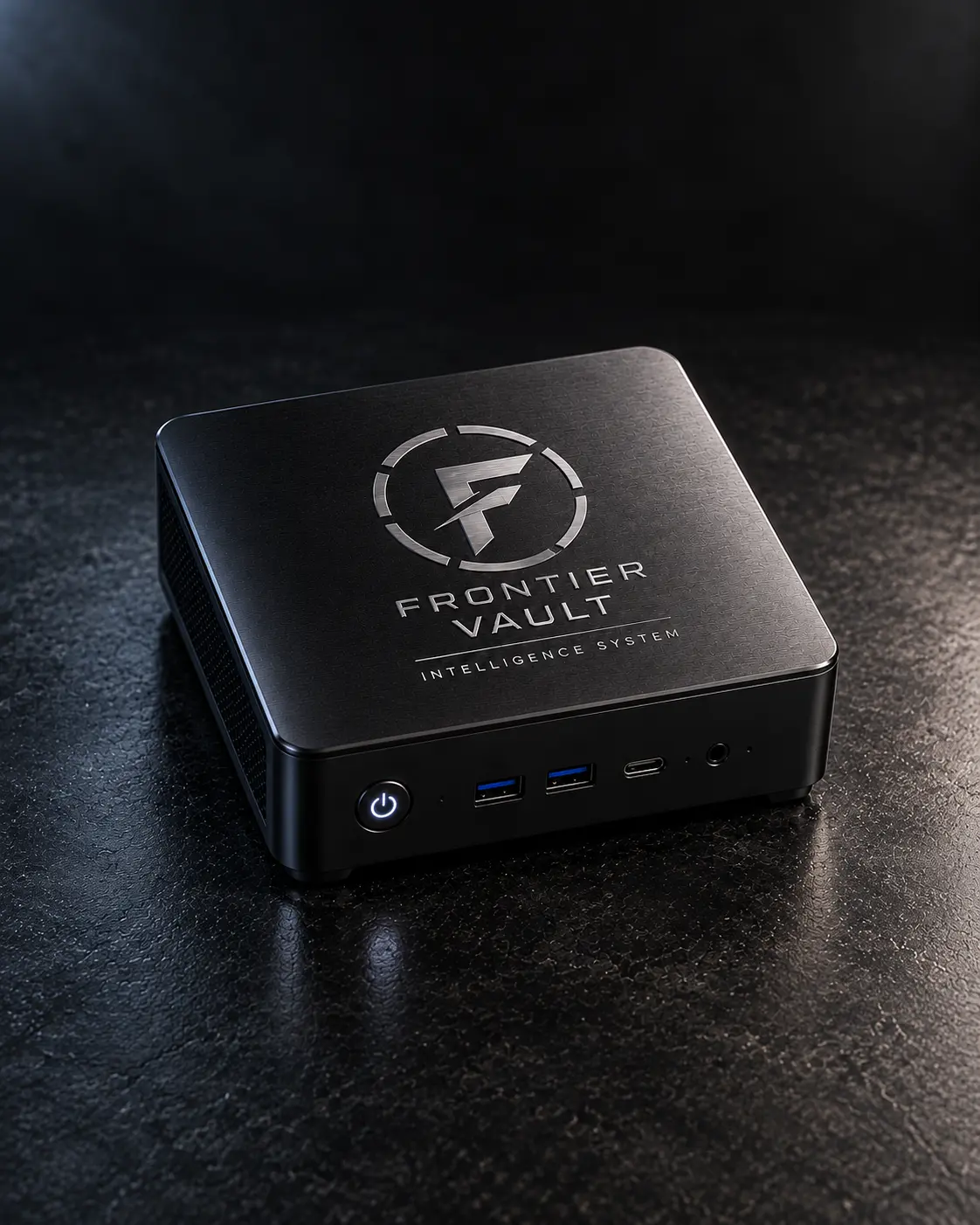
The Frontier Vault direction begins with voice-guided setup. The operator can explain the company in familiar terms. Frontier AI can ask focused follow-up questions, show what it understood and request confirmation before the configuration becomes active.
Voice is not permission to skip control. It is a way to reduce the distance between operational knowledge and system setup. Every material value still needs a visible state: proposed, reviewed or approved.
02 / LEARNING
Learning must exist inside the task.
Traditional software training separates instruction from the moment of need. A person watches a general demonstration, returns to work and later encounters a specific problem without the trainer present.
An operating system should be able to answer the question where it occurs.
The Learning Intelligence direction is designed around that moment. A user can ask for an explanation, see the next step and practice in a guided example that does not alter live records. When the user returns to the task, the system can show exactly what will change and wait for authorization.
The objective is not to make judgment automatic. It is to make competence available on demand.
03 / GOVERNANCE
The record must remain governed and customer-owned.
Construction intelligence is not only the document, quantity or cost value. It is the relationship between them.
A takeoff quantity has a drawing and revision. A quote has inclusions, exclusions, validity and a responsible supplier. A field record has a location, time, author and condition. An actual cost has a coding decision. An installed asset has acceptance, documentation and service history.
If those relationships disappear on export—or remain usable only while a subscription and external service are active—the customer does not own the full operating memory.
Frontier Vault is being designed as a local-first system. The aim is not merely to keep files on customer hardware. It is to preserve usable relationships, permissions and audit history under the customer's control.
That architecture also creates a clearer standard for AI: identify the source records used, distinguish evidence from inference and preserve the human decision that followed.
05 / MEMORY
Approved history must survive the project boundary.
RICS identifies a structural construction problem: data often resets at each project boundary. A useful pilot on one job can therefore become another isolated experiment on the next.1
The Intelligence Loop is designed to prevent that reset. Approved records from takeoff, estimating, field execution, actual cost, documents and assets remain connected so the organization can examine its own operating evidence over time.
After enough governed history exists, the useful question is no longer only, “What happened on this project?” It becomes: “Frontier, historically, how have we performed on hospital projects?”
A responsible answer should not be a single unexplained score. It should assemble the relevant projects, identify the comparison basis and surface the strong, weak and recurring conditions. The authorized estimator or operator then decides what should influence the next plan.
The system retrieves and organizes the company's evidence. The company retains authority over the conclusion.
THE REAL ADOPTION METRIC
Measure correct work—not software activity.
The usual adoption metrics are too shallow. A login does not prove a field record was entered correctly. A completed training video does not prove a foreman can recover from a mistake. A prompt count does not prove that an AI-assisted decision was traceable.
These measures connect ease of use to operational integrity. They also expose the real purpose of adoption: not more software activity, but a more complete and trustworthy Intelligence Loop.
Source notes
- RICS — AI in Commercial Property and Construction Report 2026, accessed September 14, 2026.
- Associated General Contractors of America — August 2026 employment update, published September 4, 2026.